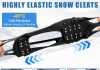


?Are we ready to test traction so we can move with confidence on ice and packed snow?

Product Overview
We’ll summarize what the Crampons Ice Cleats Traction Snow Grips for Boots Shoes Women Men Anti Slip 19 Stainless Steel Spikes Safe Protect for Hiking Fishing Walking Climbing Mountaineering offers. These are compact traction devices designed to fit over a variety of footwear and to add spikes for grip on icy and slippery surfaces.
We like that the product name itself clearly lists intended uses—hiking, fishing, walking, climbing, and mountaineering—so buyers know the intended environments. Below we break down the most important specifications in a quick table to help set expectations.
Quick Specifications Table
We’ll present the core specs in a simple table to help you scan the product details quickly.
| Spec | Details |
|---|---|
| Product name | Crampons Ice Cleats Traction Snow Grips for Boots Shoes Women Men Anti Slip 19 Stainless Steel Spikes Safe Protect for Hiking Fishing Walking Climbing Mountaineering |
| Spikes per foot | 19 stainless steel spikes |
| Spike material | Stainless steel |
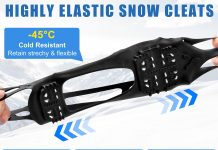
| Upper material | Thermoplastic elastomer (TPE), 5 mm thicker than ordinary rubber |
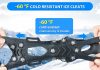
| Cold tolerance | Performance to -45°C |
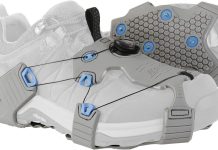
| Attachment | Stretch TPE body with adjustable strap |
| Carrying | Portable, includes carry bag |
| Fit | Unisex; sizes labeled “L” mean Large (not Left) |
| Weight | Lightweight and pocket-sized when folded |
| Use cases | Trail running, hiking, ice fishing, walking on icy driveway, climbing, mountaineering |

Crampons Ice Cleats Traction Snow Grips for Boots Shoes Women Men Anti Slip 19 Stainless Steel Spikes Safe Protect for Hiking Fishing Walking Climbing Mountaineering
What’s in the box
We’ll list what arrives when we open the package so there are no surprises when we receive the product.
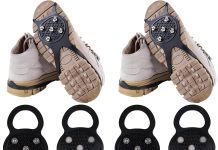
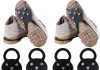
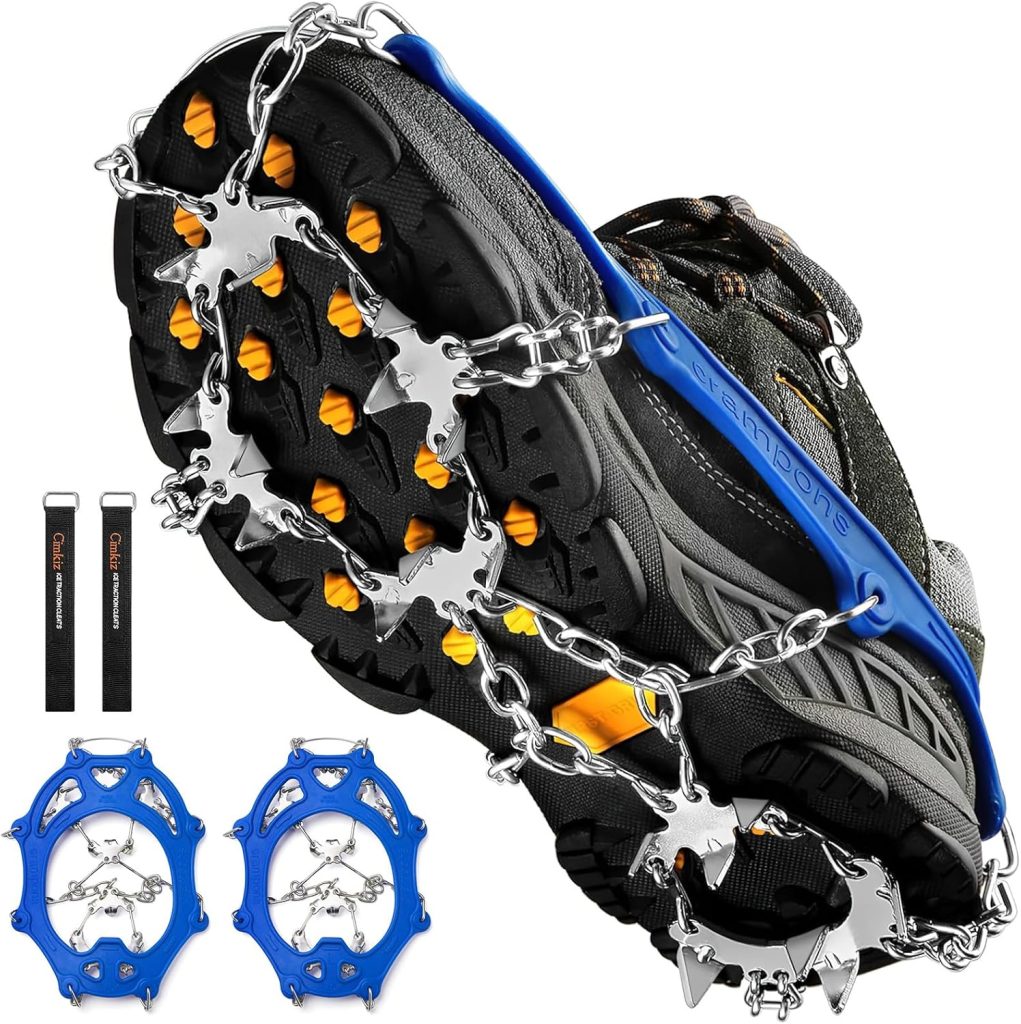
When we open the package we typically find a pair of crampons (one for each foot), an adjustable strap on each unit, and a small carry bag for storage and transport. There are no separate left/right pieces—these are symmetrical and can be used on either foot. The packaging often includes a simple diagram or picture showing how to fit the cleats.

Design and Materials
We’ll describe the materials and construction so we can evaluate durability and comfort.
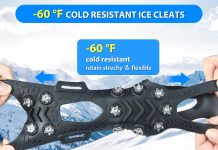
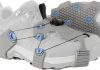
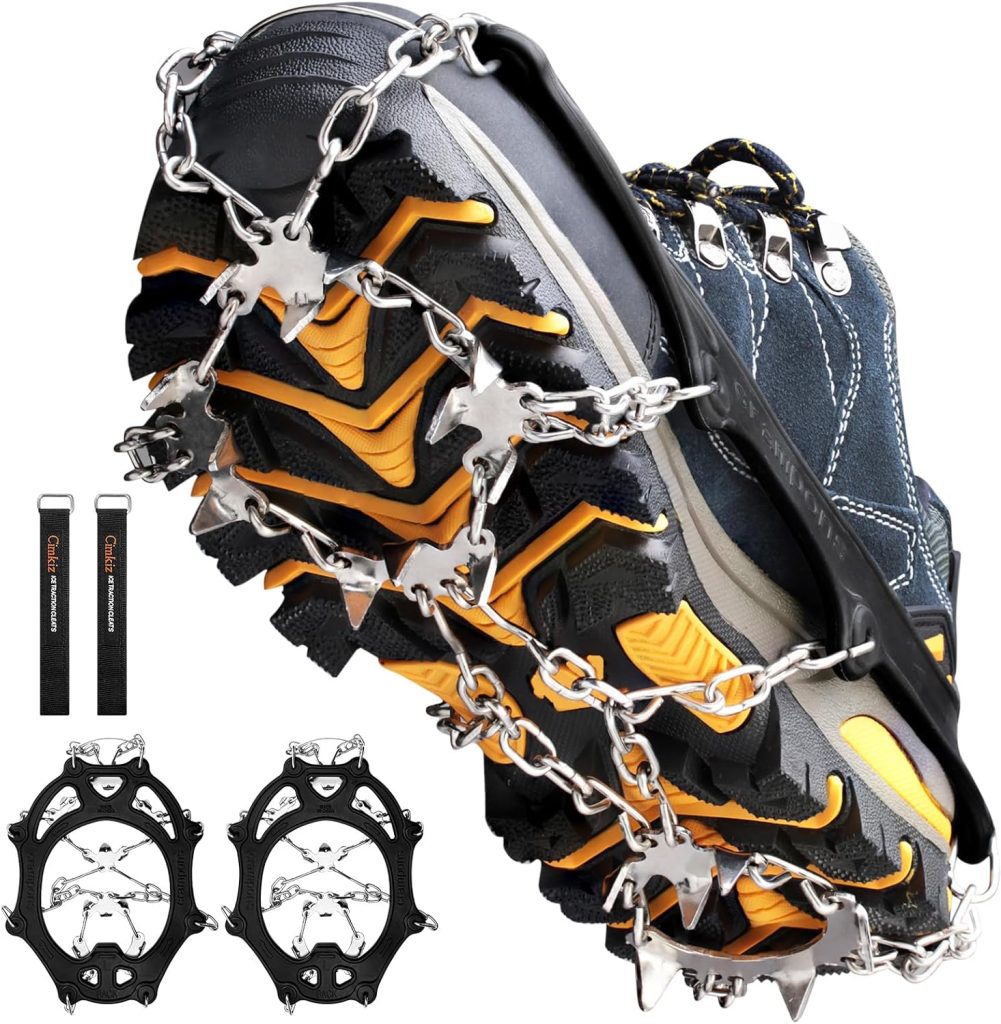
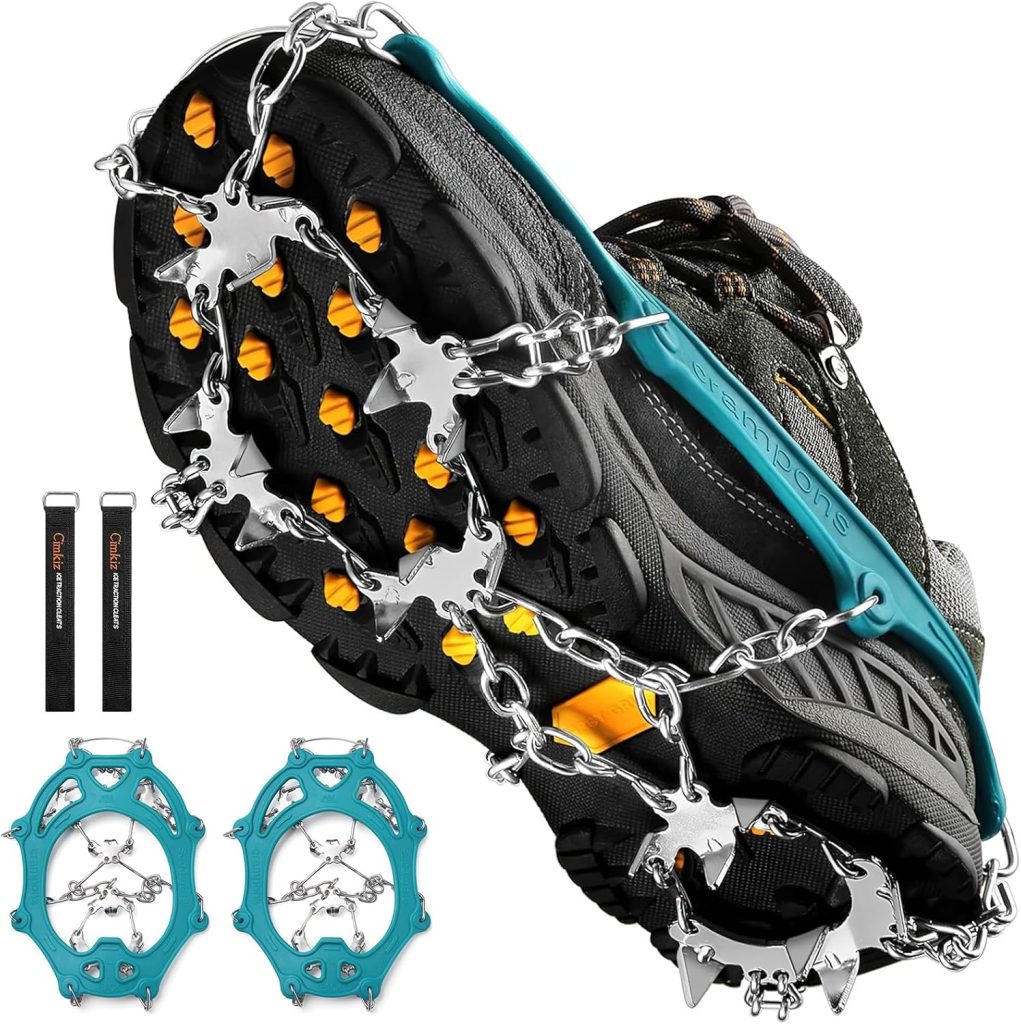
The main body is made from thermoplastic elastomer (TPE), which is described as being 5 mm thicker than ordinary rubber on this model. That design choice gives more resistance to tearing and better performance at very low temperatures. The 19 spikes are stainless steel and are mounted securely within a chain system that aims to hold the spikes firm under pressure and on varied terrain.
Thermoplastic Elastomer (TPE) Properties
We’ll explain why TPE matters and what benefits it gives us in practice.
TPE is a flexible, durable polymer that retains elasticity in cold temperatures, which helps prevent cracking. On these grips it provides stretch to fit over shoes and boots while resisting tears that can occur with ordinary rubber. The thicker TPE also helps the cleats maintain shape under load and keep a snug fit.
Spike and Chain System
We’ll describe how the spikes are arranged and what that means for traction.
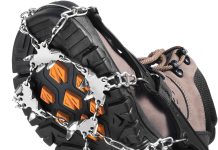
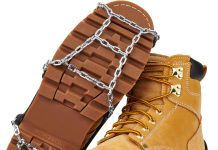
There are 19 stainless steel spikes per foot arranged across the sole area and along strategic contact points. The spikes are integrated into a firm chain system that stabilizes the spikes so they don’t shift or rotate during steps. This layout increases grip for forward motion, braking, and side-to-side stability.
Performance on Different Surfaces
We’ll go through real-world performance on a range of surfaces so we can see where these crampons excel and where they have limits.
These cleats are primarily designed for ice, packed snow, icy driveways, wet grass, and muddy trails. They work quite well on hard-packed snow and sheet ice, providing confident traction during walking and light hiking. On slushy snow the spikes still bite but the benefit lessens as spikes can collect snow. On soft, deep snow the crampons are less effective compared to full-length mountaineering crampons because the spikes don’t provide flotation.
Ice and Pack Snow
We’ll explain usage when the ground is frozen and slippery.
On ice and packed snow the stainless steel spikes deliver strong purchase. The 19 spikes per foot give multiple bite points so we feel secure stepping and stopping. The firm chain and spike arrangement reduce the feeling of slipping forward and help control sudden slips.
Wet Grass and Mud
We’ll describe traction on softer, more variable ground.
On wet grass and muddy trails these cleats improve traction considerably by giving edges to grip into the surface. They are not a substitute for aggressive trail-specific studs, but they reduce the chance of slipping on wet slopes or muddy spots.
Shingle, Gravel, and Pavement
We’ll cover the limitations on hard, abrasive surfaces.
On pavement, asphalt, or gravel we notice limited benefit and increased wear on the spikes and chain components. Walking frequently on dry pavement will dull spikes faster. We recommend using them primarily for icy and snowy conditions and removing them for long pavement sections.
Fit and Sizing
We’ll cover how to choose the right size and how these conform to various footwear types.
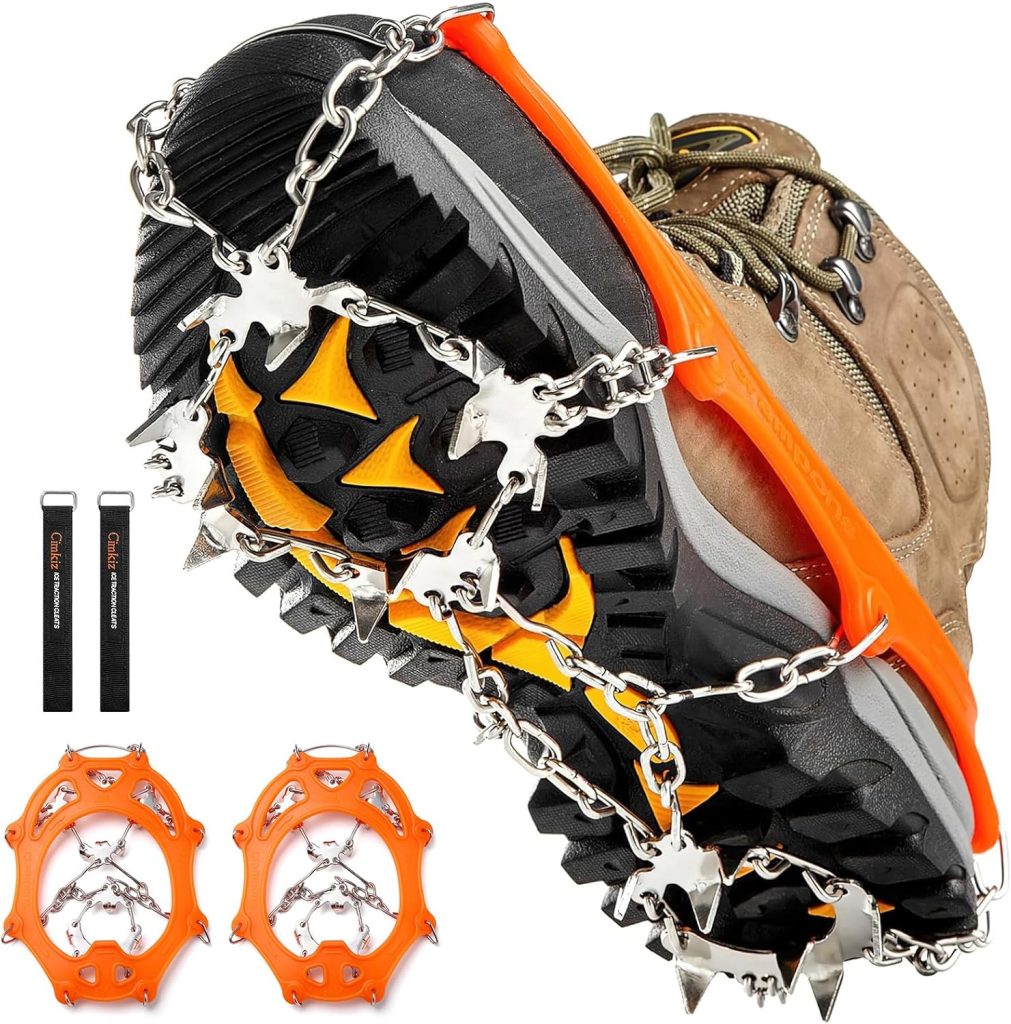
These crampons are designed to be flexible and to fit over a range of shoes, including hiking shoes, boots, and mountaineering boots. They come in common sizes (S, M, L, etc.), and the manufacturer labels sizes like “L” to mean Large rather than Left—this is important, because there is no left/right difference.
How to Find the Right Size
We’ll guide the reader through picking the correct size.
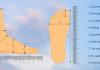
We recommend measuring the length and width of your shoe sole and comparing it to the product’s size chart provided by the seller. If you frequently change footwear between sneakers and bulkier boots, choose a size that accommodates your largest shoe. The stretchy TPE and adjustable strap help fine-tune the fit.
Putting Them On and Taking Them Off
We’ll explain the process to make it less frustrating the first few times.
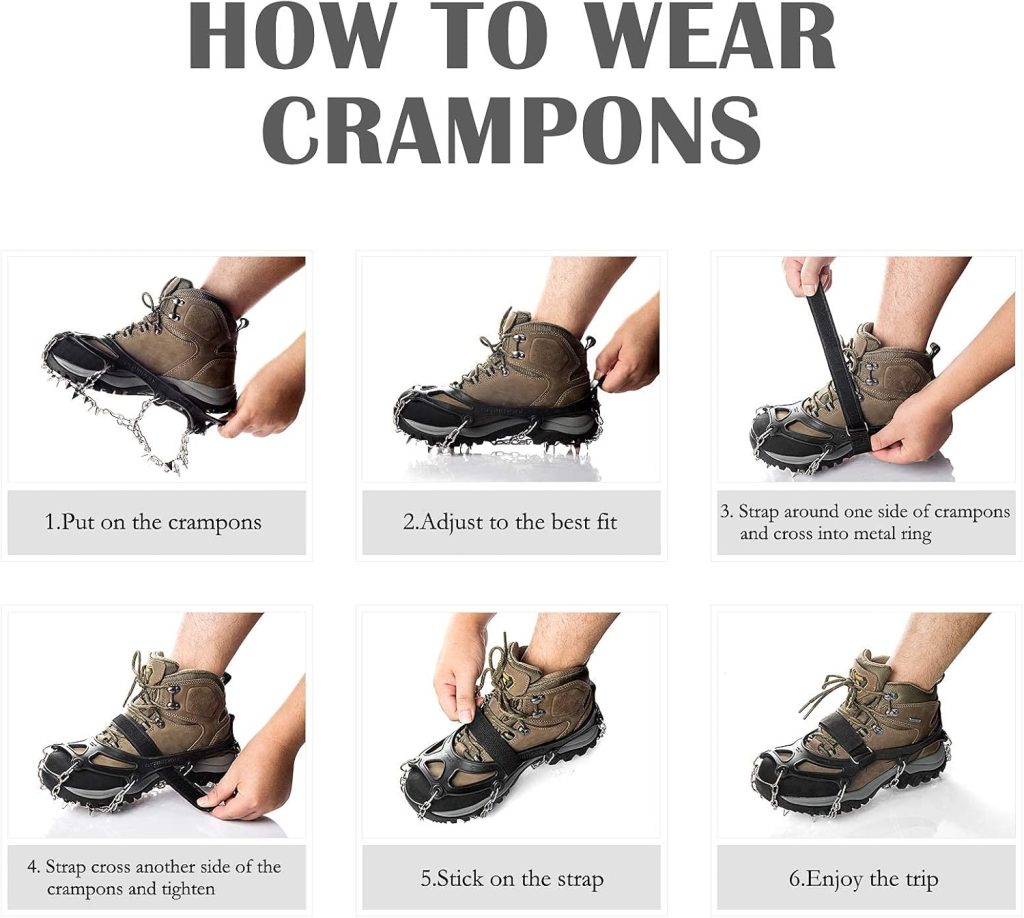
Putting them on is straightforward: stretch the TPE body over the toe and heel of the shoe, position the spikes under the sole, and secure the adjustable strap across the top if included. Taking them off means releasing the strap and peeling them off from heel to toe. The elasticity helps them slip on quickly, but make sure spikes are not contacting the ground while adjusting to avoid damage.
Comfort and Feel
We’ll evaluate how these crampons affect walking comfort and balance.
We notice that the TPE body has enough flex to allow natural foot bending, which helps maintain a normal gait. The spikes are isolated enough to keep walking comfortable for most users, and there isn’t a pronounced pressure point under the ball of the foot if sized correctly. For long hikes on mixed terrain, we recommend monitoring for localized discomfort and adjusting the strap for an even fit.
Noise and Feedback
We’ll mention audible and tactile effects while walking.
Walking with these cleats on hard pavement makes a metallic clicking noise from the spikes, which can be noticeable. On ice and snow the feedback is reassuring—each step feels secure. We prefer to remove them before returning to long pavement stretches because of noise and spike wear.
Durability and Cold Performance
We’ll discuss how these perform season after season and in extreme cold.
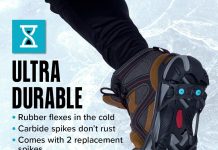
The stainless steel spikes resist corrosion and retain sharpness well compared to plated or low-grade metals. The thicker TPE construction resists tearing and holds up better in subzero temperatures; the product is rated to perform at temperatures down to -45°C. With normal winter use for walking and light hiking, these cleats should last multiple seasons if we avoid excessive use on pavement and stored properly.
Maintenance Tips
We’ll give practical advice to extend product life.
Rinse the crampons with fresh water after use to remove road salt, sand, or grit and dry them fully before storage. Inspect spikes periodically for deformation or dulling. Tighten or replace the strap if it begins to fray. Store them in the carry bag out of direct sunlight and away from extreme heat to prevent TPE degradation.
Safety Considerations
We’ll highlight how to use these safely and what to avoid.
While these grips significantly improve traction, they do not make us invincible. We still recommend adjusting our pace for conditions, using poles on steep or variable terrain, and avoiding sudden weight shifts. Avoid climbing steep ice faces or technical mountaineering routes with these—instead use dedicated mountaineering crampons with front-points and crampon-compatible boots.
When Not to Use These
We’ll list situations where they are not appropriate.
We should not use these for technical climbing, glacier travel, or on very high-angle snow/ice where front-point crampons and specialized hardware are required. They’re not ideal for deep, unconsolidated snow where flotation is needed, and they are not appropriate for prolonged walking on sharp rocky terrain as this will damage the spikes.
Pros and Cons
We’ll present a balanced list to make decision-making simpler.
We believe the following pros and cons summarize the product’s value.
| Pros | Cons |
|---|---|
| 19 stainless steel spikes for solid traction | Not suitable for technical mountaineering |
| Thick TPE material resists tearing and cold | Wear on spikes if used on pavement |
| Compact and lightweight with carry bag | Metallic noise on hard surfaces |
| Adjustable strap improves fit | Limited flotation on deep soft snow |
| Unisex and wide compatibility with footwear | No left/right orientation shown—size labels can confuse buyers if not read carefully |
Comparing to Alternatives
We’ll compare these crampons to other common options so we can evaluate relative strengths.
Compared to microspikes with fewer studs, these provide more spike contact points (19 vs. 6–12) which often improves grip on ice. Compared to full crampons used for technical climbing, these are lighter, more portable, and more comfortable for walking, but lack front points and rigid frame. Against rubber-soled slip-on cleats with embedded studs rather than spikes, the stainless steel spikes on this model are more aggressive and typically grip better on solid ice.
Microspikes vs. These Crampons
We’ll highlight key differences for everyday winter walking.
Microspikes are often lighter and lower-profile, which can be more comfortable under lighter shoes. Our crampons here offer a more aggressive spike layout which can translate to better bite on hard ice, but may be bulkier and noisier.
Mountaineering Crampons vs. These Crampons
We’ll outline why we wouldn’t replace technical gear with these.
These grips are not a replacement for rigid mountaineering crampons. Those have a frame, front points, and attach to crampon-compatible boots for steep ice and technical climbs. Our crampons are best for urban or trail winter travel rather than alpine climbing.
Price and Value
We’ll consider whether the product delivers good value for its likely price range.
Given the materials (stainless steel spikes and thicker TPE) and included carry bag, these crampons offer solid value for recreational users who need reliable traction for walking, hiking, and ice fishing. They are less expensive and more practical for many users than technical mountaineering crampons, and the durability features make them a cost-effective option if used as intended.
Who Should Buy These
We’ll describe the ideal user profile.
These are ideal for commuters who face icy sidewalks, hikers on winter trails, anglers walking on frozen lakes or shorelines, and anyone who needs an easy-to-store traction aid for seasonal walks. They suit men, women, teenagers, and older adults who want to reduce slip risk in winter conditions.
How to Wear Safely — Step-by-step
We’ll walk through the application steps to avoid common mistakes.
- Place the cleat on the ground with the spikes facing down.
- Stretch the TPE body over the toe of the shoe and pull towards the heel.
- Ensure the spikes sit correctly beneath the sole and align with the shoe’s contact areas.
- Secure the adjustable strap over the shoe as directed.
- Take a few short steps on a safe surface to confirm fit and adjust the strap if needed.
We recommend practicing putting them on inside or on a non-icy surface until we feel confident.
Troubleshooting Common Issues
We’ll provide solutions when things don’t go as planned.
If the cleat slips off mid-walk, double-check the strap and that the TPE has seated into shoe recesses around the heel and toe. If spikes feel uneven, remove and reposition to ensure even placement under the sole. If the strap frays, replace it or use a secondary securement temporarily until a strap replacement arrives.
Cleaning and Storage
We’ll present best practices to keep them usable season after season.
After each use, rinse with water to remove salt and grit. Wipe dry and allow to air dry fully before storing. Put them in the carry bag and store in a cool, dry place away from ozone-generating devices and direct sunlight to prevent TPE degradation. During off-season storage we recommend checking spikes for rust or bending and sharpening or replacing if needed.
Environmental and Ethical Considerations
We’ll touch on materials and environmental impact.
Stainless steel is recyclable and durable, which reduces frequent replacement. TPE is not as biodegradable as natural rubber, but it offers long-term durability that reduces waste associated with premature failure. If environmental concerns are a priority for us, choosing a durable product and caring for it properly reduces overall footprint.
Frequently Asked Questions (FAQ)
We’ll answer common buyer questions we anticipate.
Q: Are these crampons left and right specific?
A: No. There is no left or right difference. The “L” mark indicates the size Large, not Left.
Q: Can we use these on running shoes and mountaineering boots?
A: Yes. They are flexible enough to fit both running shoes and mountaineering boots, but for steep technical climbs use mountaineering-specific crampons.
Q: Do the spikes rust?
A: The spikes are stainless steel, which resists rust substantially, but we still recommend rinsing off salt and drying to maximize lifespan.
Q: How cold can they handle?
A: The TPE is rated to perform down to -45°C, so they maintain flexibility in very cold conditions.
Q: Will these damage inside floors or car interiors?
A: Avoid wearing them indoors or in cars—spikes can scratch surfaces. Remove them before entering buildings or vehicles.
Real-World Use Cases and Scenarios
We’ll describe specific situations where these crampons help us most.
- Winter commutes: We feel safer on icy sidewalks and steps when wearing these.
- Short day hikes into snowy trails: They reduce the need to scramble or sidestep on packed snow.
- Ice fishing: We have greater confidence navigating icy shorelines and small frozen lakes.
- Elderly or less steady walkers: Added traction lowers the risk of falls when shuffling across icy areas.
- Trail running on icy singletrack: For non-technical routes they help maintain momentum and prevent slips.
We should not rely on them for technical glacier travel, vertical ice, or long mountaineering approaches.
Final Verdict
We’ll summarize our overall impression and recommendation.
We find these crampons to be a highly practical solution for general winter traction. The 19 stainless steel spikes and thicker TPE construction combine to provide reliable grip, durability in cold weather, and a secure fit across many types of footwear. They represent a sensible, affordable option for general winter walking, trail use, and ice-related outdoor hobbies.
If our primary needs are commuting, non-technical hiking, or occasional winter outdoor activities, these crampons are an excellent value. If we need gear for technical ice climbing or glacier travel, we should select specialized crampons and boots built for those demands.
Purchase and Care Checklist
We’ll finish with a short checklist to help us make the purchase and maintain the product.
- Measure shoe sole and compare to seller’s size chart before ordering.
- Avoid long use on pavement to reduce spike wear.
- Rinse and dry after each use to remove corrosive salt and grit.
- Store in the included bag in a cool, dry place away from sunlight.
- Replace strap if fraying; replace or sharpen spikes if damaged.
We hope this review gives us the clarity to decide whether the Crampons Ice Cleats Traction Snow Grips for Boots Shoes Women Men Anti Slip 19 Stainless Steel Spikes Safe Protect for Hiking Fishing Walking Climbing Mountaineering fit our winter needs.

Disclosure: As an Amazon Associate, I earn from qualifying purchases.